As writers, it’s good for us to take the temperature of bookstores by doing a health recap. When I first worked in publishing, the health of the publishing industry depended on the health of bookstores. Multiple bookstore chains gave ample outlets through which readers discovered their next read, the next book to buy a s a gift,and to leave the store with way more purchases than they intended.
It’s a new world, a new day. That was before Amazon. That was before digital books. That was before downloadable audio books.
All those forces—and more–brought about the declining health of the bookstore. Each year more chains closed. Eventually, only a few clung onto life support. I watched anxiously for the biggest of all to fail–Barnes & Noble. It seemed inevitable. From 2010 to 2020 130 B&N stores closed.
Bookstore Rescue
Enter James Daunt, Barnes and Noble CEO and head of Waterstones, the largest bookstore chain in Great Britain. Both chains were headed to the mortuary. Daunt took charge of Waterstones first. What he learned there he then applied to Barnes & Noble when he became that chain’s CEO. Let me summarize the results by saying that Barnes & Noble opened 60 new locations in 2024. Quite the dramatic turnout in just four years. Growth remains the name of the game for both Waterstones and B&N.
The secret sauce contains few ingedients. It basically comes down to understanding what people want from a bookstore and giving booksellers real power to make decisions that fit their local community.
Why Local Decisions Work
Local teams choose the titles they carry. They create their own displays. They recommend the books they love, not the ones they are required to shelve. And now B&N is back to creating best-sellers. For example, Katherine Rundell’s Mona’s Eyes became a breaktrhough debut in part thanks to the enthusiasm the B&N local bookstores’ support.
“We excel at serendipitous discovery and browsing,” Daunt told the Authors Guild Bulletin (issue Winter 2025-Spring 2026). “Human curation beats algorithmic recommendations.”
But wait, if readers love to buy books in real stores, why couldn’t B&N keep their stores open?
Daunt explains it this way: “There’s a contradiction between the disciplines of chain retailing and bookselling. Chain retailing is about uniformity and consistency and imposing…controls necessarily to achieve that. That works in most branches of retail, whether you’re selling clothes or shoes or sneakers. Unfortunately, if you apply that to books, you’ll end up with a pretty dull bookstore. You’re running identical bookstores that don’t please anybody.”
The Pandemic Effect
While Barnes & Noble closed their stores during the first portion of the Pandemic, they spent that time reorganizing stores, going through the inventory, and refreshing physical stores to fit their communities.
Meanwhile, a different type of Renaissance was occurring in independent bookstores. Many had always meant to develop a vibrant online presence, but the need wasn’t felt strongly enough to make that happen. But with Pandemic readers unable to visit stores, the staff had nothing but time–and the desire to see their store survive the Pandemic–caused them to dive into creating websites through which buyers could make selections. Some readers came by the bookstore to pick up their books, others had the books delivered or even mailed.
Along with sudden online availability, people, with nothing but time at home on their hands, turned to baking bread, starting new hobbies, and reading War and Peace (book clubs were formed to plod through tomes). Hence, a double-digit growth surge took place starting shortly after the shutdown and lasting for about five years. Books were “in.” People rediscovered the joy of reading.
According to the American Booksellers Assn., 422 new bookstores opened in 2025, a 31% jump from 2024.
Health Recap: Going strong with no signs of weakness.
Bookshop.org Gives Bookstores a Boost
Fortuitously launched in January 2020, this online site was designed to provide book shopping that would pay 80% of each sale to the buyer’s local independent store(s). Meant to compete against Amazon for easy online book-buying, it also saw itself as a way to infuse more sales into local stores.
Many bookstores turned to bookshop.org during the Pandemic for help in keeping their doors open. Five years later, they’re keeping a running tally of how much money they’ve provided local stores. Today that number is
$46,739,934.49
Raised For Local Bookstores

Health Recap: Growing strong with lots of local support.
Other Bookstores’ Health Recap
So how is Books-a-Million doing? And Hobby Lobby?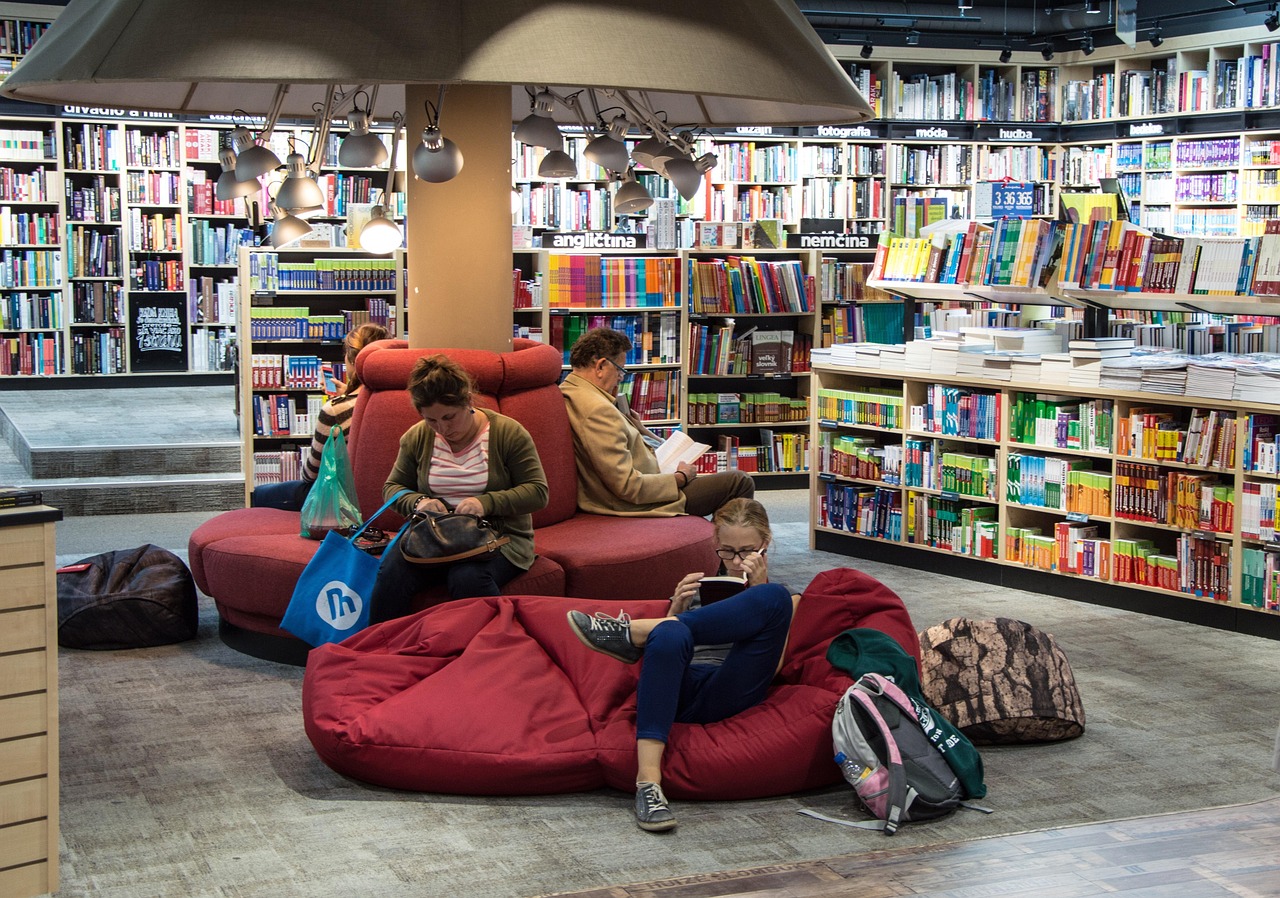
Books-a-Million
“We’re committing more capital to our bookstores because the bookstores have performed extremely well,” Clyde Anderson. BAM executive chairman, told Publishers Weekly late in 2025. The retailer was in the process of opening 15 new outlets that year, which means 220 outlets across 32 states.
BAM, the second-largest bookstore chain in the country, closes few stores, and the store-opening program features many instances where new stores are replacing older outlets or repositioning stores in locations—like dying malls—where sales have fallen off. The new stores average about 15,000 sq. ft., and in addition to books feature manga, collectibles, puzzles, and gifts. Many stores also have Joe Muggs cafés.
Faith-based books have always been a staple for BAM, and CEO Terry Finley believes BAM is likely the largest seller of those titles. It has had a mixed history with Bibles, though. While the chain has always featured Bibles, it cut back for a time when sales slumped, but now they have returned in a big way, helped by the growing interest in nondenominational Bibles, some of which have different colored covers and other features. “We have a huge Bible business, and 60% of the Bibles we sell are exclusively ours developed in partnership with publishers,” Finley said.
Hobby Lobby
Primarily an arts-and-crafts business, Hobby Lobby has a division called Mardel, which sells Christian content via books, Bibles, etc. The product generally sells at a 40% discount off retail.
Hobby Lobby continues to open new stores (six so far this year), with more than 1,000 locations in 48 states. Celebrating core Christian values, the company lists its values as follows:
- Honoring the Lord in all we do by operating in a manner consistent with Biblical principles
- Offering customers exceptional selection and value
- Serving our employees and their families by establishing a work environment and company policies that build character, strengthen individuals and nurture families
- Providing a return on the family’s investment, sharing the Lord’s blessings with our employees and investing in our community
The Bottom Line on Bookstores’ Health?
These remarks from James Daunt seem a good way to conclude:
I’ve been told, literally for 35 years, some form of doom and gloom. Nobody’s reading fiction, nobody’s reading, it’s all audio. I have remained relentlessly positive throughout all that, because I’ve been working in a physical book shop in which, every day, loads of people come in and buy more books than they did the year before.”
Featured image by Anastasiya Badun from Pixabay
Second image by Lubos Houska from Pixabay